Back in 2010, during a brief time when I was co-owner of a knitting shop, a simple flyer from a local sheep farmer posted on the shop bulletin board changed the direction of my creative life. It was for a workshop on dyeing fiber and spinning yarn. I signed up right away and spent a wonderful weekend with like-minded people, learning a craft that has since become a true passion of mine—one that is labor-intensive, but incredibly rewarding.
I’d love to share a bit about what goes into creating a handspun yarn.
Every skein begins with fiber—sometimes a carefully chosen fleece that has been processed into roving or top, and other times indie-dyed fiber from talented artists who prepare fiber for spinners, felters, and weavers. Each one is a little different, which is part of what makes the process so enjoyable.
When I sit down to spin, I choose from my three most-used wheels: my Majacraft Rose, Louet Victoria, or Ashford eSpinner 3. Sometimes I spin with a specific goal in mind—perhaps for a project or a certain yarn weight. Other times, I simply start spinning and let the fiber lead the way.
I’m especially drawn to fine yarns, though I do enjoy the occasional art yarn. Blends that include silk or sari silk are among my favorites—they add a subtle richness and beautiful texture. With so many sheep breeds and fiber types available, no two spinning sessions are ever quite the same. Some days I create a rustic, airy yarn full of bounce; other days I spin something smoother and more refined, with a bit more density and drape. And many times, I simply let the fiber become what it wants to be.
I’m not a fast spinner, but a deliberate one. It usually takes me two days to spin the singles and another day to ply them, depending on their diameter. I like to let the singles rest overnight before plying—partly to help manage the twist, and partly because life has a way of setting its own pace.
Once the yarn is plied, it’s transferred from the bobbin onto a niddy noddy, swift, or yarn weasel, and tied in several places to form a hank. I have an antique yarn weasel that still “pops,” and it’s one of my favorite tools to use.
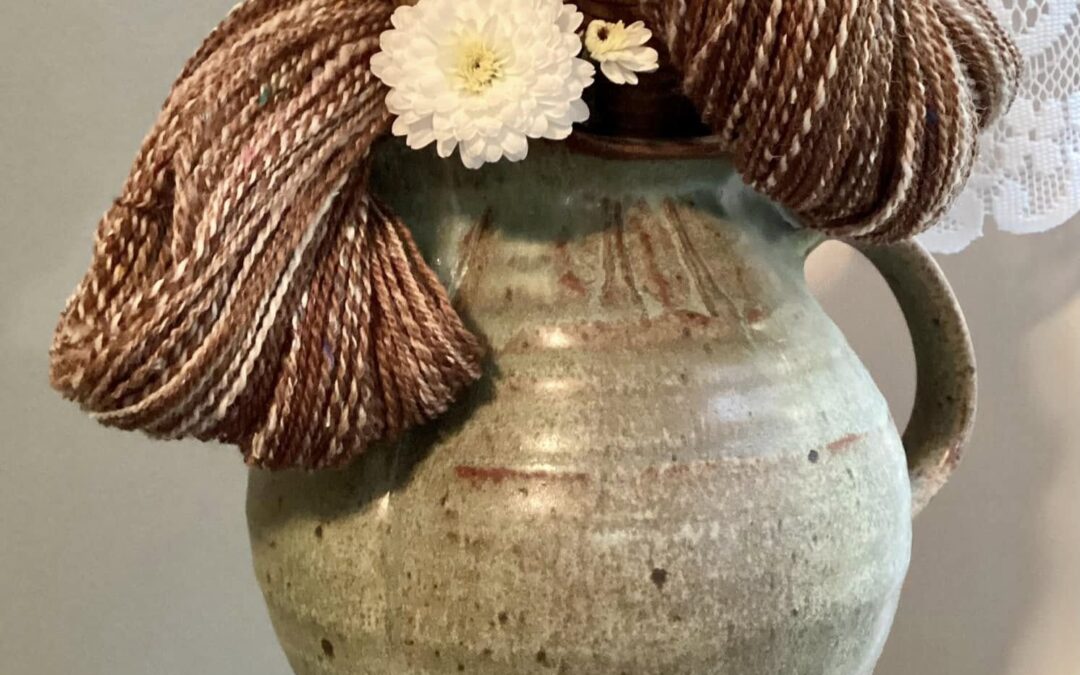
From there, the yarn is wet finished to set the twist, using a gentle wash such as Eucalan. This is when the yarn really begins to come into itself. The fibers bloom, often creating a soft halo, and settle together to form a stronger, more cohesive yarn. Afterward, it’s laid flat to dry. I never weight my yarns, as doing so can stretch the fibers and affect how the yarn behaves later when it’s knitted, crocheted, or washed.
This stage is one of the most satisfying parts of the process. It reveals the true nature of the yarn. A well-balanced yarn will hang straight in the hank, without twisting to the left or right—a small but meaningful sign that everything is working in harmony. While some spinners intentionally add extra twist for certain effects, my goal is always to create a balanced yarn.
Next comes determining the yardage. Every spinner has their own method; mine is to count the wraps on the niddy noddy or swift, then measure and calculate from there. Because it isn’t an exact science, my yarns are always listed with approximate yardage.
The final step is to wind the hank into a skein—ready to be used and enjoyed in whatever comes next.
Thank you for taking a moment to learn a bit about the process behind handspun yarn at Fiber Pearls.
Founder & Maker, Lynda Lee